Understanding how your design performs under load is essential before moving into manufacturing. At CAD FEA Solutions, we provide accurate static structural analysis to evaluate stress, deformation, and overall structural performance of parts and assemblies.
Using advanced Finite Element Analysis (FEA), our engineers identify potential weaknesses, optimise designs, and help ensure your components can safely withstand their intended operating conditions.
Linear static analysis is a simulation method used to predict how a component or assembly responds when subjected to constant loads and fixed operating conditions.
This type of structural static analysis helps engineers understand how forces move through a design and provides valuable insight into strength, stiffness, and durability before physical testing.
Linear static simulations are commonly used to assess:


Our simulations calculate how forces affect your design by identifying areas of high stress and analysing material behaviour under load.
This helps determine:

A component may be strong enough to avoid failure but still deform beyond acceptable limits. Our analysis evaluates how much a part moves, bends, or changes shape under applied forces.
Understanding deformation helps ensure:

Accurate results depend on correctly representing real-world conditions. Our engineers carefully define loads, supports, and constraints to ensure each simulation reflects how the design will operate in practice.
We can simulate a range of load conditions, including:
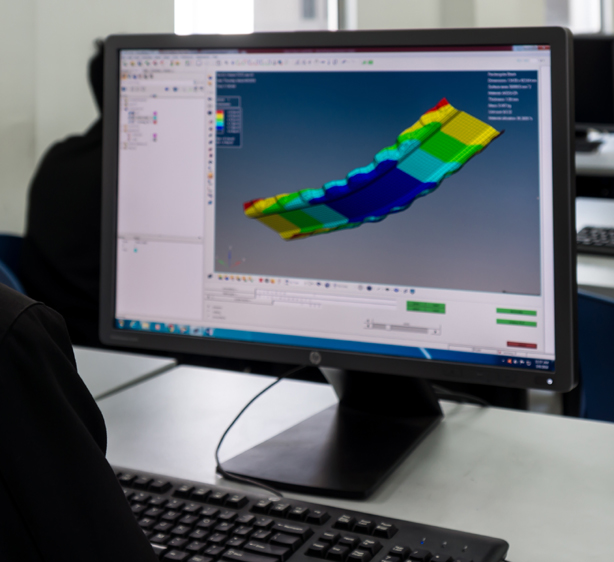
Our workflow integrates directly with your CAD models, allowing efficient movement between design, simulation, and optimisation.
This enables:
Reduce uncertainty and improve product performance with accurate static structural analysis from CAD FEA Solutions. Our engineers can help identify structural risks, optimise your design, and provide the confidence needed to move forward.
Contact our team today to discuss your linear static simulation requirements.
Contact UsStatic structural analysis is an engineering simulation method used to understand how a component responds to constant loads. It evaluates factors such as stress, strain, deformation, and safety margins.
Linear static analysis is used to assess the strength and stiffness of components or assemblies under predictable loading conditions. It helps engineers validate designs before manufacturing.
Static analysis evaluates designs under constant or slowly applied loads, while dynamic analysis examines changing loads such as vibration, impact, and movement over time.
Yes. By identifying design issues through simulation, engineers can make improvements earlier in the process, reducing reliance on multiple physical prototypes.
Typical requirements include CAD models, material properties, load information, boundary conditions, and details about how the component will be used.
Yes. Linear static analysis can evaluate both individual parts and assemblies, including how components interact and transfer loads through a structure.
